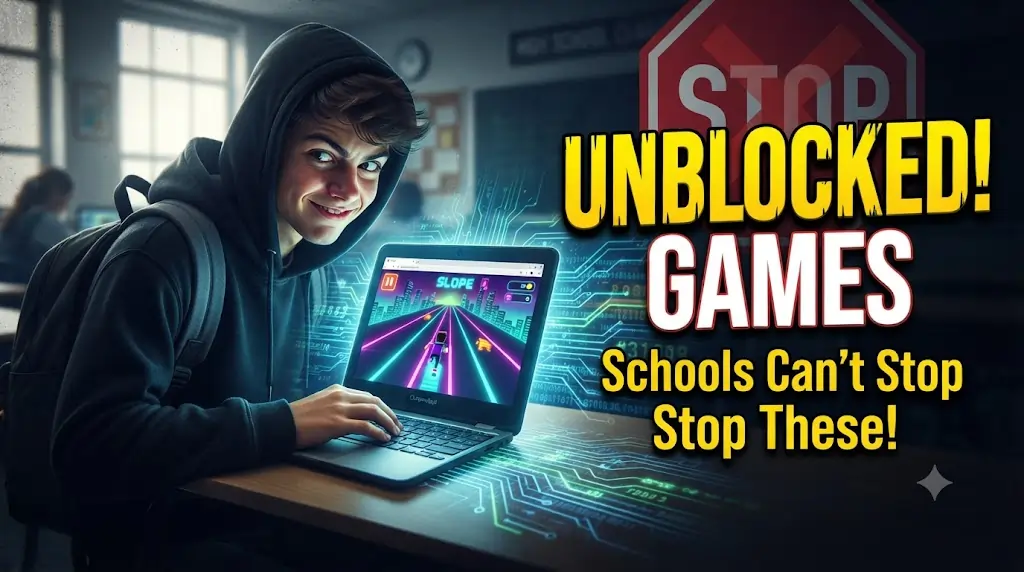
If you’ve spent any time on a school Chromebook lately, you’ve probably heard the term “Unbanned G+” thrown around in hallway conversations or seen it pop up in search suggestions. It’s not a new social network, and it has nothing to do with the long-defunct Google+. Instead, it’s become shorthand for a fast-growing corner of the internet: browser-based game hubs that manage to slip past the filters schools and workplaces put in place to block gaming sites.
What “Unbanned G+” Actually Means
Despite the name, Unbanned G+ isn’t one official website or company. It’s more of an umbrella term for dozens of similar portals that host lightweight, browser-playable games — action, puzzle, racing, sports, you name it — and structure themselves in ways that let them dodge common network restrictions.
The confusion with Google’s old social platform is understandable, since the “G+” naming was clearly inspired by it, but the two have no real connection beyond a shared set of letters.
Why It’s Spreading So Quickly
A few things are driving the trend:
- No installs required. Everything runs on HTML5 and JavaScript directly in the browser, so there’s nothing to download, no admin permissions needed, and nothing that trips up a locked-down school device.
- Mirror sites multiply fast. When one link gets blocked, new versions pop up elsewhere almost immediately, which keeps access alive even as IT departments try to keep pace.
- Word of mouth and video content. Links get shared through classmates, group chats, and how-to videos, which accelerates adoption in a way official gaming sites rarely see.
- Low barrier to entry. Games load instantly, with no accounts, subscriptions, or payments — a big draw for students looking for a quick distraction between classes.
The Trade-Offs Worth Knowing
The convenience comes with some real caveats worth keeping in mind:
- Network policies exist for a reason. Schools and employers typically block gaming sites to preserve bandwidth and keep people focused — using workarounds can run against acceptable-use policies even where it isn’t illegal.
- Not every mirror is trustworthy. Because these sites multiply so quickly and with little oversight, quality and safety vary a lot from one to the next. Sites that ask for personal information, push unfamiliar browser extensions, or prompt unexpected downloads are worth avoiding.
- It’s a moving target. Because the whole ecosystem is built around evasion, today’s working link may be gone tomorrow, and that instability is part of the appeal for some users and part of the frustration for others.
The Bigger Picture
Unbanned G+ is really a case study in how quickly casual internet culture adapts around restrictions. As long as there’s a filter, someone will find a browser-based way around it — and as fast as one link gets shut down, another tends to appear. Whether that’s viewed as harmless downtime or a policy headache probably depends on which side of the firewall you’re sitting on.
Bio Table
| Topic | Details |
| Focus Keyword | Unbanned G+ Explained |
| Category | Gaming / Web Trends |
| Primary Audience | U.S. students, gamers, casual web users |
| Related Industry | Browser Gaming, EdTech, Web Platforms |
| Main Technology | HTML5, Cloud Hosting, Proxy Routing |
| Popular User Base | Middle school, high school, college students |
| Key Benefit | Instant access to browser games |
| Main Concern | Safety, malware, privacy risks |
What “Unbanned G+” Actually Means
The phrase Unbanned G+ generally refers to websites or gaming hubs that provide access to games that are otherwise blocked on school, workplace, or institutional networks. The “G+” portion often stands for “Games Plus,” “Gaming Plus,” or simply branding used by specific gaming portals. Contrary to what some assume, it is not directly connected to Google’s discontinued social platform Google+.
In practical terms, these sites host browser games that can bypass content filters using alternate domains, mirrors, proxies, or cloud-hosted infrastructure. Users access them through ordinary browsers without downloading software. This simplicity is a major reason for rapid adoption.
These platforms thrive because they remove friction. No installation, no registration, and no high-end hardware requirements. For users with limited access, that convenience matters more than advanced graphics.
The Origin Story: Where This Trend Actually Came From
Unblocked gaming is not new. The trend began in the late 2000s when Flash-based games dominated websites like Miniclip and Kongregate. Students discovered that school firewalls blocked gaming domains but often failed to block mirror sites or educational-looking domains.
As browser technology evolved, Flash declined and HTML5 became the standard. Around 2020–2023, browser gaming experienced another surge. Developers rebuilt classic games using lightweight web engines that loaded instantly across devices.
The “Unbanned G+” naming trend appears to be part branding and part search behavior. Users began searching for specific portals using variations such as “unbanned games,” “G+ games,” and “games plus unblocked.” Search engines amplified these terms as demand grew.
Why Unbanned G+ Is Growing So Fast
Several forces explain why this trend continues to expand. Better browser performance, improved internet speeds, and stronger cloud hosting infrastructure make browser gaming smoother than ever.
Additionally, younger users value convenience over complexity. Many prefer launching a game in five seconds rather than downloading a 50 GB title on a console or PC.
Social sharing also accelerates growth. A single TikTok clip, Discord link, or Reddit recommendation can send massive traffic to a gaming hub overnight. This creates a powerful network effect.
1. Zero Friction Access That Actually Works
The biggest reason behind growth is convenience. Traditional gaming often requires downloads, patches, accounts, and storage. Unbanned G+ removes all of that.
A user clicks a link and starts playing instantly. That experience matches modern internet behavior where people expect immediate access to content.
For short sessions—during class breaks, work pauses, or commuting—instant gameplay is highly appealing. This makes browser gaming uniquely suited to modern attention patterns.
2. It Works Where Everything Else Fails
Many institutions restrict gaming apps, stores, and external downloads. However, some browser-based gaming hubs still manage to remain accessible.
They often rotate domains, use mirror sites, or host content through services that aren’t immediately flagged by filters. This allows access even in heavily restricted environments.
That adaptability gives Unbanned G+ a major edge over traditional gaming platforms like Valve Corporation Steam or Epic Games Epic Games, which depend on software installation.
3. HTML5 Means Any Device, Any Hardware
HTML5 transformed browser gaming. Older Flash games struggled with compatibility and security issues. Modern HTML5 games load faster and perform better.
This means a Chromebook, low-end laptop, or aging smartphone can still run many games smoothly. Users no longer need expensive GPUs or gaming PCs.
That hardware independence broadens audience reach. Students with budget devices can enjoy gaming without technical barriers.
4. A Decentralized Structure That’s Nearly Impossible to Kill
Unlike centralized platforms, many unblocked gaming hubs operate through distributed hosting. If one domain disappears, clones or mirrors quickly appear.
This decentralized structure makes permanent shutdown difficult. Administrators can migrate libraries, rebrand, and relaunch with minimal downtime.
Because the ecosystem is fragmented, traffic spreads across many nodes instead of a single website. That resilience fuels long-term growth.
5. Viral Sharing With Built-In Social Mechanics
Virality matters. Unblocked game links spread rapidly through social platforms such as Discord, Reddit, and TikTok.
Students share links privately in group chats or community forums. Once a site gains popularity, organic traffic spikes.
Social proof strengthens adoption. If friends recommend a gaming hub, users trust it more and return frequently.
6. Games Designed for Stolen Moments
Most popular titles on these hubs are optimized for short sessions. Think 2–10 minute rounds rather than multi-hour campaigns.
Games like endless runners, puzzle challenges, and quick shooters fit perfectly into spare moments. These “micro-play” experiences align with modern habits.
This design philosophy increases repeat usage. Players return multiple times daily because sessions feel lightweight and rewarding.
How These Game Hubs Actually Work
Most Unbanned G+ platforms function as game aggregators. They don’t always create games themselves. Instead, they host, embed, or mirror existing browser titles.
Some run directly from cloud servers. Others use iframe embedding or proxy routing to deliver content through alternate pathways.
Revenue usually comes from display advertising, sponsorships, or traffic monetization. According to reports, high-traffic browser gaming sites can generate substantial monthly ad income through impressions and clicks.
What Games Are Actually on These Platforms
Game libraries vary, but common categories include racing, puzzle, platformer, shooter, and sports games. Popular titles often include retro classics and indie-style games.
Examples include endless runners, parkour games, battle arenas, and sandbox titles inspired by franchises like Minecraft Minecraft and Among Us Among Us.
The best hubs maintain hundreds or even thousands of titles, updated frequently to retain engagement and encourage repeat visits.
Why Students Search for This
Students make up a large portion of demand because school networks commonly block entertainment websites. During breaks, they search for accessible alternatives.
Short gameplay sessions offer stress relief. Gaming can provide quick mental refreshment between assignments or lectures.
There’s also a social factor. Shared gaming experiences strengthen peer interaction. Multiplayer browser games create mini-communities around leaderboards and challenges.
Is Unbanned G+ Safe? The Honest Answer
Safety depends entirely on the site. Some platforms are harmless and simply serve browser games with ads. Others may contain aggressive pop-ups, trackers, or malicious redirects.
Users should be cautious with unknown domains, excessive ads, and forced downloads. Legitimate browser games typically do not require software installation.
Good safety practices include using updated browsers, ad blockers, antivirus software, and avoiding suspicious permissions. Privacy matters because some sites collect browsing behavior for advertising.
The Google+ Confusion
Many users assume “G+” references Google+, the social platform shut down by Google Google in 2019.
That assumption is usually incorrect. In most gaming contexts, G+ is branding shorthand rather than a Google service.
This confusion persists because the “G+” label remains recognizable in search behavior, causing people to associate it with Google even when unrelated.
Pros and Cons
| Pros | Cons |
| Instant access to games | Security risks on shady sites |
| No downloads required | Heavy ads and pop-ups |
| Works on low-end devices | Privacy concerns |
| Great for short sessions | Inconsistent quality |
| Huge game variety | Domains frequently change |
The pros explain popularity, while the cons highlight why users should remain careful.
Legitimate Alternatives Worth Knowing
If safety matters, several legitimate gaming platforms offer browser-based experiences without questionable hosting.
Popular options include CrazyGames, Poki, and Kongregate.
Subscription services like Apple Arcade and Xbox Cloud Gaming also provide secure gaming ecosystems with better quality control.
These alternatives reduce malware risks while maintaining convenience.
What the Future of Unbanned G+ Looks Like
The future of Unbanned G+ Explained points toward larger, faster, and smarter browser gaming ecosystems. WebGPU, improved cloud rendering, and AI-driven game optimization could dramatically enhance browser experiences.
We may also see tighter moderation and safer hosting as user awareness grows. Browser games increasingly compete with mobile gaming rather than just casual web entertainment.
Meanwhile, decentralized hosting will likely remain central. As long as restrictions exist, demand for accessible gaming hubs will continue. The trend shows no sign of disappearing.
Frequently Asked Questions
What does Unbanned G+ mean?
It usually refers to unblocked gaming websites offering browser games accessible on restricted networks like schools or workplaces.
Is Unbanned G+ related to Google+?
No. Despite the name, it typically has no official connection to Google+.
Are Unbanned G+ websites legal?
Legality depends on hosting, licensing, and local rules. Some operate legitimately; others may violate content rights.
Can Unbanned G+ harm my device?
Potentially yes. Unsafe sites may contain malware, trackers, or malicious ads.
What are safe alternatives to Unbanned G+?
Trusted options include CrazyGames, Poki, Kongregate, and cloud gaming platforms.
Conclusion
Understanding Unbanned G+ Explained helps clarify why this gaming trend is growing so quickly. Its success comes from instant access, cross-device compatibility, decentralized hosting, and viral sharing among students and casual players. Browser gaming has evolved far beyond simple Flash games and now represents a major digital entertainment category. However, convenience comes with trade-offs, especially regarding safety and privacy. Users should approach unknown gaming hubs carefully and prioritize trusted platforms when possible. As web technology improves, Unbanned G+ and similar ecosystems will likely become even more influential in shaping the future of accessible online gaming.