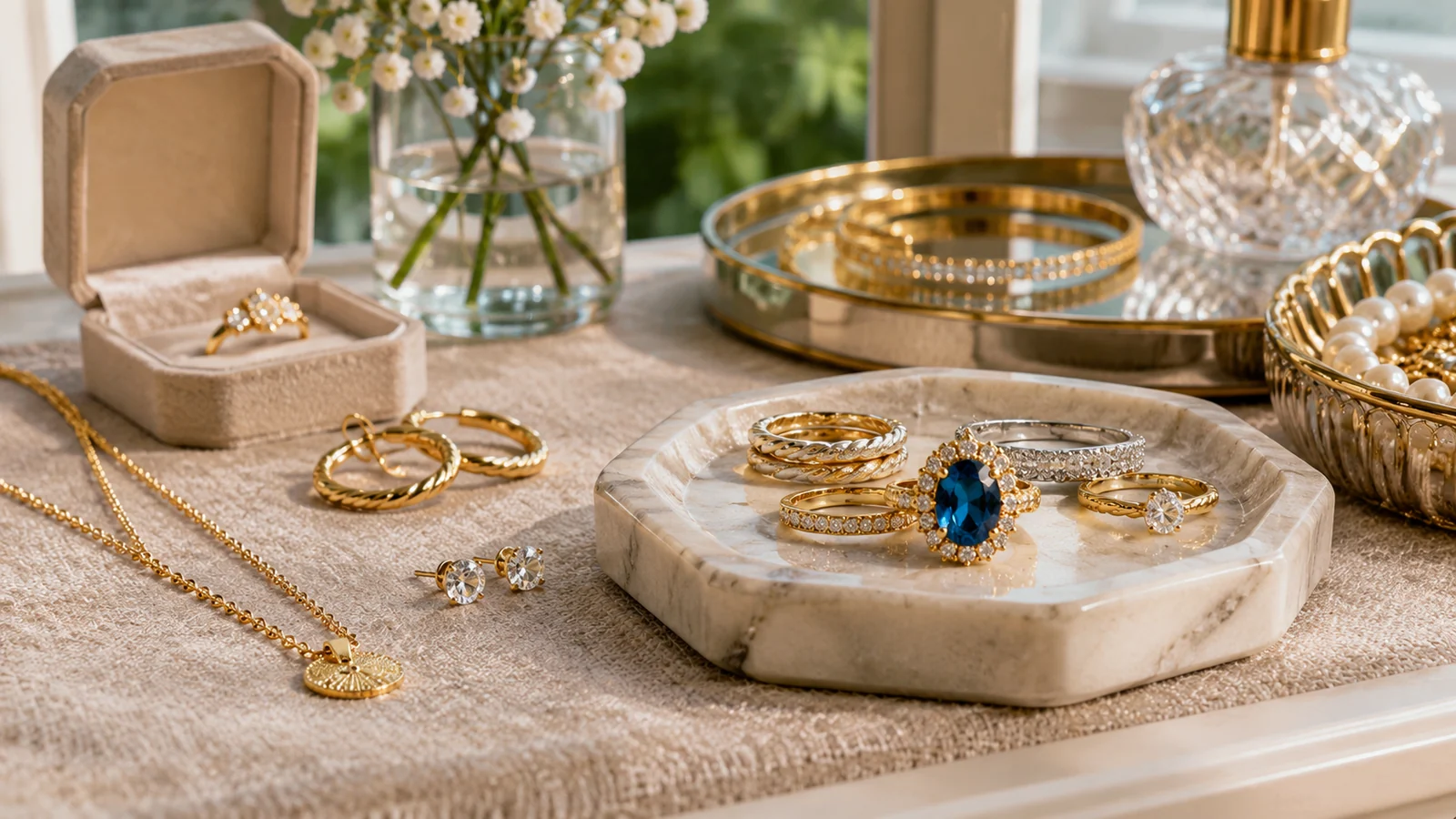
A diamond ring used to mean one thing: someone was getting engaged. A gold necklace was a graduation gift. A bracelet came in a velvet box on a birthday. For decades, fine jewelry lived inside those ceremonial brackets, and most people accepted that framing without question. That relationship with jewelry has changed. And the shift is more fundamental than a passing trend.
How Everyday Jewelry Has Become Part of Personal Style
Walk through any major city on a Tuesday afternoon, and the jewelry on display tells a different story than it would have ten years ago. Stacked rings on a commuter. A chunky gold chain over a plain white shirt. Mismatched earrings paired with office attire. These are not people dressed for a wedding or a gala. They are people who have decided that jewelry belongs in their daily rotation.
A 2025 BriteCo survey found that 4 in 5 American adults now buy fine jewelry for themselves, with enhancing personal style cited as a top motivation alongside celebrating a milestone. That figure signals something worth paying attention to: jewelry is no longer a passive category where people wait to receive something. It is an active, intentional part of how people present themselves.
This mirrors what has happened in other areas of personal style. Sneakers became collectibles. Watches became a hobby. Handbags became investments. Jewelry is following the same path, driven by the same desire to own things that feel genuinely personal rather than generic.
Why Buyers Are Building Collections Instead of Purchasing Individual Pieces
There is a meaningful difference between owning a few pieces of jewelry and building a collection. A collection has internal logic. Pieces are chosen to complement each other, to fill gaps, to reflect evolving taste. Buyers who think this way approach a jewelry purchase the way a thoughtful person approaches adding to a wardrobe: with the whole picture in mind.
According to McKinsey’s State of Fashion 2026 report, jewelry self-gifts grew 58% since 2021, a figure that reflects not just increased spending but a change in how people justify buying for themselves. The old guilt around treating yourself to fine jewelry has largely dissolved. In its place is a practical mindset: a well-chosen piece holds its value, works across many contexts, and becomes more meaningful over time.
Collectors also tend to buy more deliberately. Rather than impulse-purchasing something trendy, they think about how a new piece fits with what they already own. That discipline leads to stronger, more coherent collections and, often, higher satisfaction with individual purchases.
Mixing Statement Rings With Minimalist Jewelry
One of the clearest expressions of the collection-building mindset is how buyers approach rings. The ring finger is no longer reserved for a single symbolic piece. Stacking, layering, and mixing have become genuine styling strategies.
The Case for a Statement Ring
A statement ring anchors a look. It draws attention intentionally, whether through an oversized stone, an architectural band, or an unusual setting. Buyers who invest in one strong statement piece often find it becomes the starting point for everything else they own. Browsing fine jewelry rings is a practical way to identify what reads as a statement piece for a particular aesthetic, since the definition varies considerably from person to person.
Building Around Minimalist Pieces
Thin bands, simple solitaires, and delicate stackers serve a different purpose. They fill in the spaces between bolder pieces and work on their own when the goal is a cleaner look. The most versatile collections tend to include both ends of the spectrum, giving the wearer genuine flexibility rather than locking them into one register.
Knowing When to Mix Metals
Mixing gold and silver used to be treated as a mistake. Now it is a deliberate choice that signals confidence and ease with personal style. The key is intentionality: mixing works when it looks considered rather than accidental. A yellow gold statement ring alongside a silver stacker reads as a choice. The same combination in mismatched finishes and scales can look unresolved.
The Appeal of Different Precious Metals and Gemstones
Metal and stone choices are where personal style becomes most visible. Rings hold the largest product share in the global jewelry market at 33.9%, and gold jewelry leads all materials at 55%, with diamond jewelry forecast to grow at 5.5% annually through 2033. But within those broad categories, individual preferences vary widely.
Yellow gold has seen a strong resurgence, particularly among buyers who associate it with warmth, longevity, and a certain timelessness. White gold and platinum appeal to those who prefer a cooler, more architectural look. Rose gold, which dominated for several years, has settled into a more specific niche rather than vanishing entirely.
Gemstones follow a similar pattern. Diamonds remain the default for many buyers, but colored stones have gained real traction. Sapphires, emeralds, and opals attract buyers who want something that feels less conventional. Birthstones have moved from sentimental gifts to deliberate style choices, worn not out of obligation but because a particular stone happens to suit someone’s palette and personality.
How Personal Style Influences Long-Term Jewelry Choices
Personal style is not static, and neither is a good jewelry collection. Buyers who approach their collections thoughtfully tend to revisit their choices as their taste evolves. A piece bought at 25 might look different at 35, either because the buyer has grown into it or because it no longer fits how they see themselves.
That long-term perspective changes how people shop. Instead of asking “do I love this right now,” experienced collectors ask whether a piece will still feel relevant in five or ten years. That question filters out a lot of trend-driven purchases and pushes buyers toward pieces with genuine staying power: clean lines, quality materials, and designs that are specific without being of-the-moment.
Personal style also creates natural constraints that make collecting easier. Someone who gravitates toward a minimal, tonal wardrobe knows that a maximalist, heavily embellished ring is probably not going to integrate well, no matter how beautiful it is on its own. Those constraints are useful. They prevent the kind of scattered accumulation that leaves people with a drawer full of pieces that never get worn.
Investing in Versatile Pieces That Work Across Different Occasions
Versatility is one of the most underrated qualities in a jewelry piece. A ring that works equally well with a linen shirt on a Saturday morning and a blazer on a Wednesday evening earns its place in a collection. One that only makes sense at formal events will sit unworn most of the year.
Buyers who build the most useful collections tend to prioritize versatility at every price point. A simple gold band is the classic example: it goes with almost everything, it improves with age, and it works as a standalone piece or as part of a stack. A well-chosen signet ring occupies similar territory. So does a clean oval-cut stone in a low-profile setting.
Versatility does not mean playing it safe. A bold piece can still be versatile if it suits the wearer’s everyday style rather than requiring a special occasion to justify it. The test is simple: if a piece only comes out of the box a few times a year, it is not working as hard as it could.
The Difference Between Following Trends and Building a Timeless Collection
Trends in jewelry are real and worth paying attention to, but they are a starting point rather than a buying guide. A trend signals what is resonating culturally at a given moment. Whether that resonance connects to a particular buyer’s style is a separate question entirely.
McKinsey data shows jewelry self-gifts have grown 58% since 2021, alongside branded jewelry expanding at 8.3% annually between 2021 and 2024, suggesting that buyers are increasingly looking for pieces with recognizable craft and identity rather than generic trend items.
The distinction between a trend purchase and a timeless one often comes down to specificity. A piece that is beautiful because of its craftsmanship, its material quality, or its design logic tends to age well. A piece that is beautiful primarily because it looks like what everyone else is wearing tends to date quickly. Neither is wrong as a purchase, but they serve different roles in a collection. One earns its keep for decades. The other has a shelf life.
Where the Collection-Building Mindset Leads
The shift from occasion-based buying to personal-collection building reflects something broader about how people relate to the objects they own. Jewelry is no longer a category that sits outside everyday life, brought out for special moments and otherwise stored away. For a growing number of buyers, it is a consistent part of how they show up in the world.
Starting with a few well-chosen pieces, understanding what works together, adding deliberately over time. That approach builds something more meaningful than any single purchase could on its own.
Sources used
Every statistic in the article links to its source inline. This list repeats those sources so a link builder can place them by hand if a host strips inline links.
